Southland Tales

southland.png

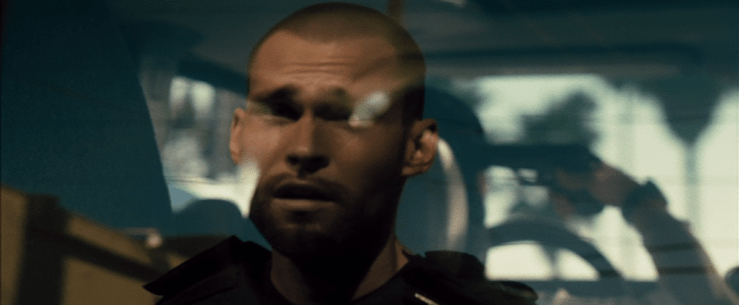
Southland Tales, Miami Vice, and Inland Empire are all 10 years old now, and they still all feel New. Nobody’s really taken on the digital expressionism of Miami Vice other than Mikey Mann in Blackhat, nobody’s done for bit-rot-as-abject-terror what Lynch did in Inland Empire, and Southland Tales with all of its screens and graphix and UI, and shots of military personnel pacing on the beach next to laptops (mosaiced with graphix and UI) framing the content we see as well, has had more of an effect on video art than entertainment cinema. Which is not to say that Southland Tales is a good film just because it looks like art post-2010, but that it is as bold as those other two and prescient within a related but not directly linked field. There is something in it which speaks to high/low distinctions, which wants to define the future and also embody the time, and which hazards imagining the apocalypse as it might actually occur within our world- screens and military on a beach framed by scrolling headlines. Nobody would notice that the world had ended, and maybe it did and we didn’t.

Southland Tales treats Important and Unimportant details in the same way, distracting us with screens within screens within 2×2 grids of screens, which would all be very 2010s fear and apathy, but Kelly cannot resist trying to tell stories within this format as well. This is the central conflict of the film- the director wants to make a film which means nothing, because he thinks that it will mean everything. The structure of the film seems nonexistent until its final act, with plot details given and then twisted and sometimes deserted in tongue-in-cheek ways, e.g. when ends are tied in a mansion-based domestic dispute. Moments like this scold audiences who like Logic and Reason, and threaten to feel smug (like Kelly is punishing his audience rather than laughing with them), but one gets the impression that this is all more of a rubber band ball than an outright tangle, as the director pulls out threads and shows infinite care and consideration in bringing them about. The world of Southland Tales feels alive, even as Kelly is adamant that the apocalypse occurred 8 years ago and all meaning has been lost.

Of the three 2006 films mentioned at the start of this, Southland Tales is the least sure of itself in everything other than its aesthetic, and Kelly calls on the other two to make his film emote when it has to. This is most obvious with the appearance of Rebekah Del Rio whose ‘Llorando’ in Mulholland Dr no doubt affected Kelly the same way it did us, and Moby’s score which sits between the slow-motion synth washes of Angelo Badalamenti, and the album pieces used in Miami Vice the same year (to sincere, rather than unnerving ends). When Moby’s score drops out, the tonal and spatial shifts of the film jar in a way that feels genuinely confrontational. We’re waiting for ‘Audrey’s Dance’ or ‘Freshly Squeezed’ to drop in and nod to us that we’re watching kitsch noir, but no such cues ever take place. Lynch and Badalamenti took the time to tell the audience that they were watching vignettes, but Kelly and Moby refuse to signpost anything. Moby’s score is too direct for cleverness or pastiche, but it manages to tap into nonconscious emotions the same way as Badalamenti’s best- when the sounds overwhelm the images there’s a dissonance in the viewer where the head can’t tell why the body is trembling. This is best exemplified in The Rock, Sarah Michelle Gellar, and Mandy Moore’s dance, which is tbh a “you feel it or you don’t” situation, but will leave the right audience confused and emotionally floored. It is also put to the test in the film’s finale which is the main source of ridicule for the film’s detractors, but destroys me every time I see it.

It is not just the dated CGI thunderstorms that remind of Attack of the Clones- Southland Tales neither begins nor ends in any satisfying way. It anxiously establishes itself, forces events to unfold, and only confidently comes into being in its final act. It feels like a trilogy rushed out or cut down to a single film, but this does not come at the expense of its believability as a film-world, and in fact the singularity of each mini-film allows us to appreciate their individual qualities. The first film, as mentioned, predicted trends in the arts and indulges the eyes while Justin Timberlake’s narrator tells and tells and tells. The second gets rid of Hollywood satire and goes for political satire instead, in a mess of deceit and subterfuge that would either leave Raymond Chandler cheering or bleeding from his nose, and political cynics squirming. The third is a dream-like whimper and bang concerned with life, death, and forgiveness as the world collapses. It is hard to describe why, but the last film is impossibly beautiful. Southland Tales is just as broken and weird and horrible as everyone says, and it is probably not the masterpiece that its revisionists say that it is, but neither of these things matter to Southland Tales which is a very special broken weird horrible mess that means everything and nothing absolutely.

Intergalactic Sonic 7″s

intergalactic

It should come as no surprise to anyone that listening to Intergalactic Sonic 7″s‘ coverage of Ash songs 1994-2002 yields similarly exhausting, dewy-eyed results as getting through e.g. a Ramones compilation tracking the eight years between Sheena Is a Punk Rocker and Howling at the Moon (Sha-La-La). Finding a relatively constant position from which to watch the shifting musical tides does more than just account for that (constant) band’s changes (if there are any); it forces us to remember while simultaneously seeing time through the eyes of another. Listening divides the past into two streams heading in the same direction- time slows as we remember, and our hearts swell exhausted as we retrace familiar images to locate people and things hidden in the backgrounds and beneath the dust. Like any document or ruin, Intergalactic Sonic 7″s appeals to more than just the quality of its contents.

Their early singles offer an alternative view of the death of grunge and the beginnings of the Weezer era (concurrently the Pavement era slightly below ground). Ash’s place within these (probably false) dichotomies is ambiguous- they’re sincere where Weezer were wry, quietly vulnerable where Weezer made their vulnerability text, and sloppy where Weezer drew attention to their cleverness. The middle era can be delineated by Tim Wheeler’s subjugation of his native Irish accent (his discomfort over pronunciation can be heard all over their early 90s material) into an apathetic sneer which still wants to emote, and a perfect 4 minutes in A Life Less Ordinary that strikes somewhere between Blink-182 and Sonic Youth, particularly in the divine noise of the guitar solo (it’s also hard not to consider that maybe the appeal of Blink-182 over their peers is that they were all the while something other than pop punk). “I smoke myself into a haze in the afternoon / Enveloped heart, the air is cool” is an all-time comforting affirmation of time and place up there with John Cale’s “I suppose I’m glad I’m on this train”, All Saints’ “This is where I want to be” and Slowdive’s “It matters where you are”.

The third stretch covers a time which was incredibly uncomfortable for any band identifying as ‘alternative rock’ since at least the early 1990s, with post-grunge and nu-metal threatening to seem like a continuation of what those young veterans had started. The question for all was whether to differentiate oneself from these developments, or to continue on the trajectory set not long ago and make-pretend obliviousness. Intergalactic Sonic 7”s answers for the band and makes the case for the latter- 2001’s Burn Baby Burn moves into 2002’s Envy and then back in time to 1995’s Girl From Mars with the aforementioned surface-level discrepancies in vocal confidence and production trends (although Envy is more complex when it transitions into Ash doing Ramones doing 60s girl pop), but no amount of clever sequencing can ignore songs like Candy. Rather than differentiating themselves or writing more frantic guitar pop, Candy sees the band playing both heart wrenching and blasé over a Walker Brothers sample, intermittently cornered by an unusually expressive breakbeat. Sometimes has the delicious lead-line of mid-period Ash but the band cannot obscure the wisdom that also sits atop Candy– there is no denying that we are in the new adult contemporary era.

Songs such as these are familiar but only just, as they tended to hide on the fringe of contemporary radio, politely coming and going, or offering convenient segues between the baroque sleaze of Robbie Williams and the worn sentimentality of Imitation of Life. It is in these moments that time stands still as much as it slips away from us- the flow is both constant and ever-shifting and try as we might to hold onto it or fix our reflected image in its surface, we cannot control where it will take us (this can be dangerous- to Iris? to Lifehouse? to Drops of Jupiter? And then where? So begins an impossibly complicated network of connections, each a step away from Candy‘s perfect frozen moment). Weezer came back and cynically parodied their way into mainstream rock radio (there was still space for frat bro rock), and the rest of Ash’s peers stayed quiet for this period before re-presenting their material to emo audiences (sad teenagers having reclaimed pop radio from sad parents and surly older brothers). We don’t see this in Intergalactic Sonic 7″s: the document closes here, leaving late period Ash as a sort of oddity or ruin of an alternative future.

The Dark Knight

heaths_joker_300x128.jpg.0

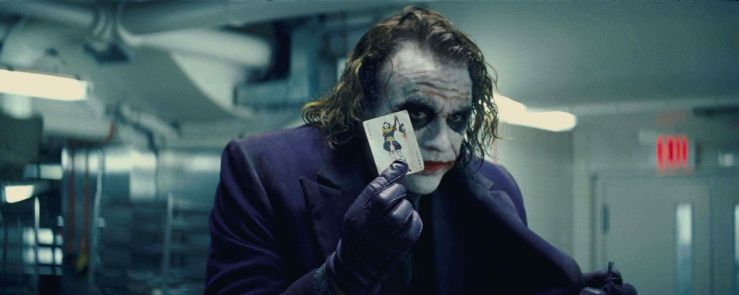
I attended this really wonderful lecture on superheroes and the War on Terror, and how a number of very important comics post-9/11 became self-critical in their examination of states of emergency and exceptional politics, and the autoimmune system that leads to the violent pursuit of ‘order’ becoming the greatest source of chaos. Because superheroes respond to ’emergency’ situations and operate within a non-legal or extra-legal capacity to inflict sovereign violence on the enemy (the enemy itself prone to slippage e.g. bin Laden, Hussein), they serve as the perfect analogy for global politics in our world which for 15 years has been in a permanent State of Emergency (and so one where illegal, extra-legal (exceptional) violence is now expected, as well as (exceptional) surveillance). This brings us to the figure of Batman who Frank Miller outed as a fascist in The Dark Knight Returns as well as the sole cause of the Joker’s existence (a weirdly prescient analogy for the War on Terror). The Dark Knight is descended directly from this Miller-ish scepticism of Batman’s usefulness, with Alfred and Lucius saying throughout “yeah it’s kind of your fault for declaring a ‘with us or against us’ crisis situation,” and the film existing as a series of decision-moments in which this debate can play out. Before long however Nolan weighs in and closes it off. The “it’s your fault”s become “somebody had to do it”s and “things get worse before they get better”s, and Nolan contrives a situation in which Batman has to turn surveillance in on the citizens of Gotham in order to save them, which of course he does. After this there is a thing about popular opinion and myth-making and fall-guys, which of course is supposed to be analogous to the Obama Hope campaign, and the villainy associated with Bush (this being 2008). Such is the wonder of reader-response that we can read this in any way we want to, but chances are we will either see it as a criticism of the War on Terror (a sort of horror film in which Batman is the villain, exercising the Patriot Act at every turn), or a love-letter to the Bush administration as the non-heroic ‘man we needed’ (justification of his actions Whatever the Cost). There is no right or wrong way to read the text, nor is there a right or wrong way to view the situation, but fwiw I find it hard to agree with the former reading in light of Nolan’s classism in the Dark Knight Rises and bro-science anti-environmentalism in Interstellar. The conflicts and conversations are there because they have to be (a rare case of comic-lore stifling an individual’s creativity for something better than if he/she were allowed free rein).

A piece of right-wing propaganda which kisses Bush on the cheek and says “don’t worry, we know who the real hero is” and insists that we proceed down the path we have taken before “things get better” (a tragi-comically misguided statement 8 years on), could still make for this horror film reading, or at least provide the viewer with thrills in its “with us or against us” mindset, as many jingoist guilty pleasures have over the years. My issue with Nolan is not his worldview (though I despise it) however, but his films themselves, maybe as exemplified by The Dark Knight. I genuinely cannot see what people get from his films, and I cannot see what interest he has in making them either. He does not seem interested in humans or emotions, which is fine, but he does not seem interested in the sensorial experiences that films can provide either. Michael Bay for example discards human poetry for effects fetishisation and action formalism- he gleefully explores the filmic language of editing or at least enjoys blowing shit up. Nolan in the Dark Knight conservatively cues talking points for exposition which establish action bits. His characters speak dryly and functionally with occasional Bad Ass one-liners fit for movie trailers and desktop wallpapers. The people who are not Important are instead anonymous (‘panicked man on boat’, ‘horrified party guest #3’) which can be expected in superhero films, and as I have already pointed out Nolan is not interested in people, but that does not mean that his worlds have to be so lifeless either. It’s this anonymity, these predictable 21st century Dark visuals (my gut tells me that we have Nolan to thank for this, but it’s probably Fincher), and the nature of Gotham as solely existing as (non)context for Batman and Joker Doing Things. Kubrick was a misanthrope who built unforgettable worlds and atmospheres, films like The Matrix are 90% exposition for the function of worldbuilding and not just talking (and the Wachowskis directed the shit out of every conversation any way), and even the much maligned Warcraft which flows biblically also wants badly to exist outside of its processes (and also had surplus heart and humanity, but whatever). Green Room, shaved down to a stage for ultraviolent encounters, feels more alive than any of Nolan’s films, and Saulnier would probably resent that too. As far as violent encounters go, Nolan seems just as disinterested in action as he does humans, emotions, worlds, and cinematic languages. As mentioned before, Michael Bay who can seem just as cynical as Nolan w.r.t. human emotion, tends to break from meat-space logic for cinematic thrills and experiments. A more conventional director might consider humans as bodies (rather than feeling things or narrative devices) in spaces, and so focus on ways to explore bodies against bodies, and bodies in environments. A lesser director might only consider these bodies, and not filmic environments. Nolan does not care for the immediate space of a scene, and breaks from them so regularly with geographical and temporal jumps that there are no stakes because there are no bodies in the spaces, only flashes of contact, and either the choreography of said bodies or their editing severs them from simple cause and effect. I suppose that this really is horror cinema for the Age of Emergency because there are no bodies, there are no environments, there is no time, and there is no reason. It’s action formatted to the logic of a 21st century news channel, and just as propagandic.

Still I am unable to divorce the film from the director and his filmography. I wonder again a) what anybody sees in his films and b) what his motivation is for making them. He cannot tell a story visually (or verbally either, but that’s another matter), he does not care about stories, and he does not care about the things that anyone would expect him to, having freed himself from the confines of narrative and human emotion. I suppose that his cinema is a cinema of ideas, e.g. ‘the one with the Joker’, ‘the one about the War on Terror’, (or gleefully thrown around back when his trilogy began) ‘it’s Batman but it’s really dark’, and not of film or film experiences. I thought I could enjoy this as an idea- as the horror film that Nolan never intended it to be, but it insults just about everything I care about in narrative and visual media in the blandest, most grandiose way possible. I fucking hate this film so goddamn much oh my god.